
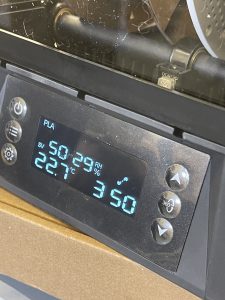
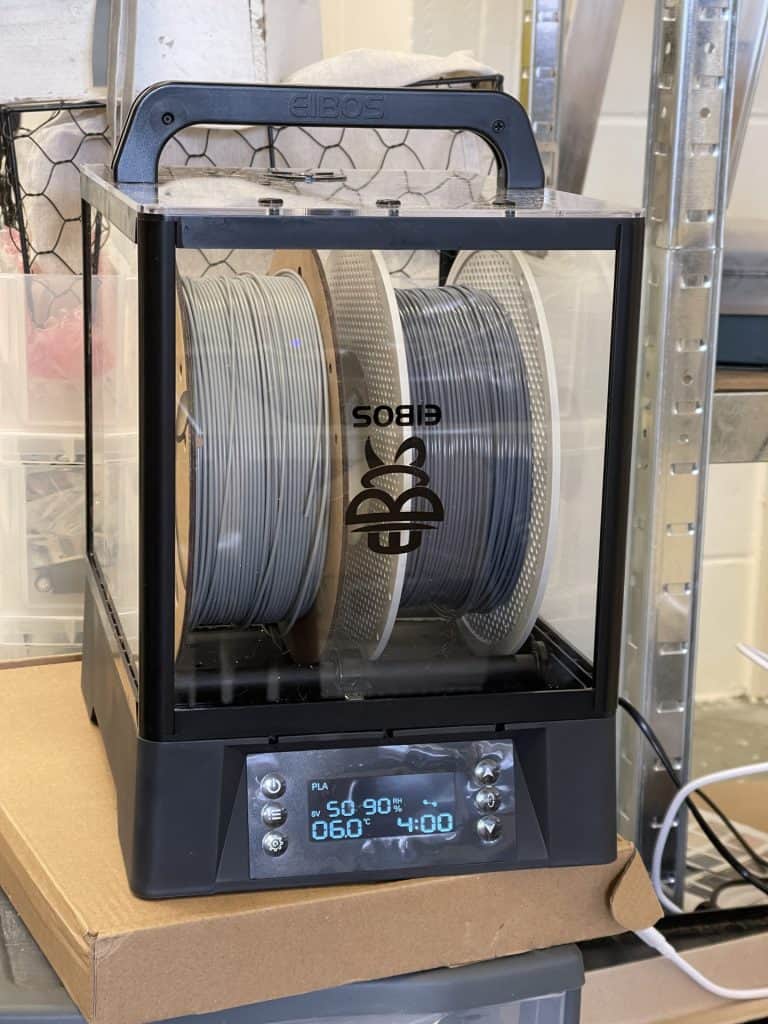
EIBOS Polyphemus is a filament dryer that comes as a simple flat-packed kit but is astonishingly advanced once built.
Moisture can have a surprising impact on 3D printing filaments, and understanding how moisture affects them so you can manage that impact is important for getting the best possible print quality.
I have to admit that when I lived in Alberta, Canada, it was so arid that I wasn’t fully convinced that moisture was a problem in 3D printing. Coming back to England really changed my mind. I have had so many problems caused by moisture that drying has become mandatory.
Moisture Absorption in Filaments
Filaments such as PA (Nylons) and PVA are well known to absorb moisture quickly and significantly, requiring storage in moisture-controlled environments.
In more commonly used filaments like PLA and PETG, the effects are less obvious.
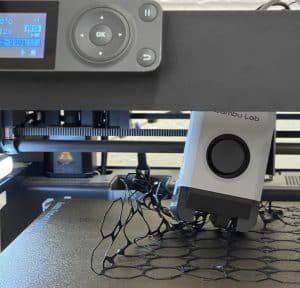
PETG, for instance, shows increased stringing during printing. PLA is generally considered more resistant to moisture, but it can still produce bubbles, and stringing, or even become brittle over time if exposed to humidity.
Mechanical Properties
Moisture causes the water in the filament to boil off during printing, potentially weakening the polymer chains and resulting in less durable parts. Although parts may appear normal, their performance can be compromised.
Stringing
As moisture boils off, it creates steam that can disrupt the flow of filament, leading to stringing. This is more pronounced in materials like PETG but visible (or even audible) in PLA too.
Odor and Emissions
Increased moisture can lead to higher emissions of fine particles during printing, which can be harmful. This is noticeable through stronger odours during the printing process.
Best Practices for Filament Storage
Dryboxes or airtight containers with desiccants are vital to keep filaments dry. This is especially important for PETG and ASA, which show noticeable degradation when exposed to moisture.
If filament has been exposed to moisture, consider drying it in an oven or a dedicated filament dryer to restore its quality.
Keep an eye on your 3D printing environment to ensure as low as possible humidity levels to prevent moisture absorption during storage and printing.
Polyphemus
The Polyphemus dryer is designed to accommodate two 1 kg spools of filament, with an option to expand for larger 3 kg spools. It features a bottom section equipped with heaters, rollers, and a control panel, as well as a removable clear polycarbonate lid.
In the main section is a dryer which circulates warm air evenly around the spools, and helps in reducing drying times and preventing hot spots that could damage the filaments.
One of the standout features of the Polyphemus is its motorised filament rotation. By pressing a button on the front, you can activate the 360-degree rotation mode, which ensures even heating of the spools. This feature is particularly useful for maintaining a consistent temperature throughout the spool.
Setup and Operation
The control panel on the Polyphemus is fairly straightforward. After turning it on, you can view the drying screen, which displays the set temperature, current relative humidity, fan speed, current temperature, and remaining drying time.
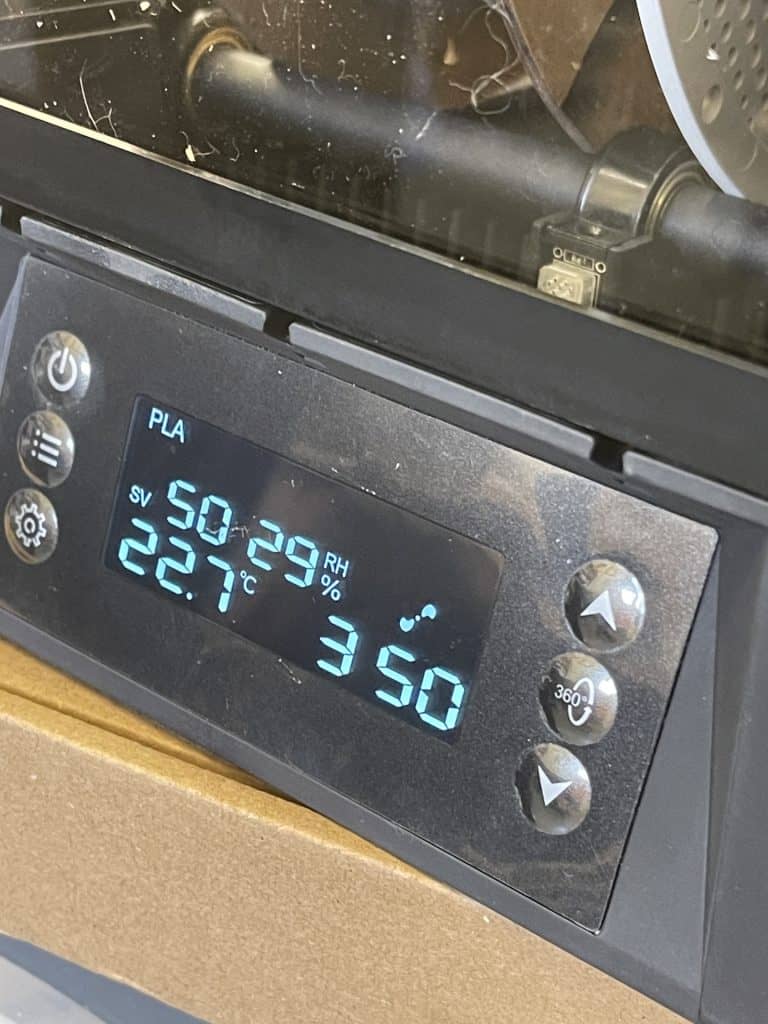
There are 12 temperature profiles, including nine preset material profiles and three customisable ones. You can adjust these settings to suit different materials and drying requirements.
Your temperature can be set between 20°C and 70°C, while the timer ranges from 30 minutes to 24 hours. For continuous drying, you can clear the timer to keep the dryer in an always-on mode.
For long-term storage, the Polyphemus features a humidity control mode. By setting your desired humidity level, the dryer will automatically maintain this level, preventing the filament from absorbing moisture. This function is particularly beneficial for moisture-sensitive filaments.
Building the Polyphemus
I must admit I put off assembling the Polyphemus because EIBOS sent me it during a particularly bad bout of sickness, but fortunately, assembly is very straightforward, requiring only a few screws.
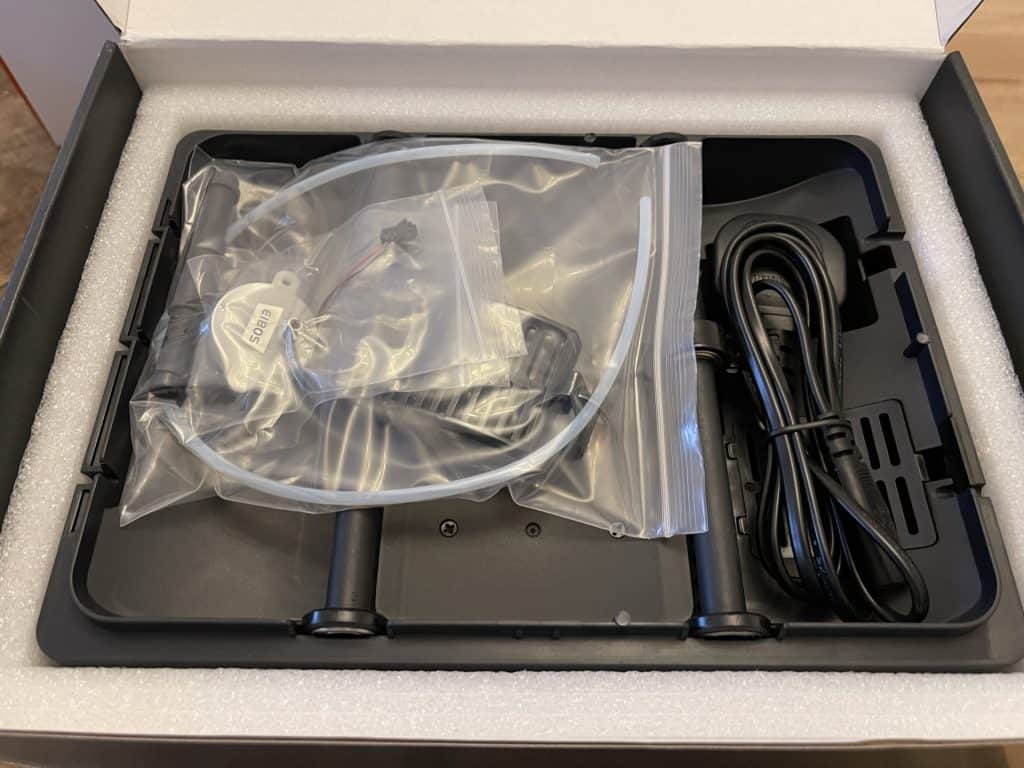
The base comes pre-assembled, and the optional 3kg extension is a simple addition too.
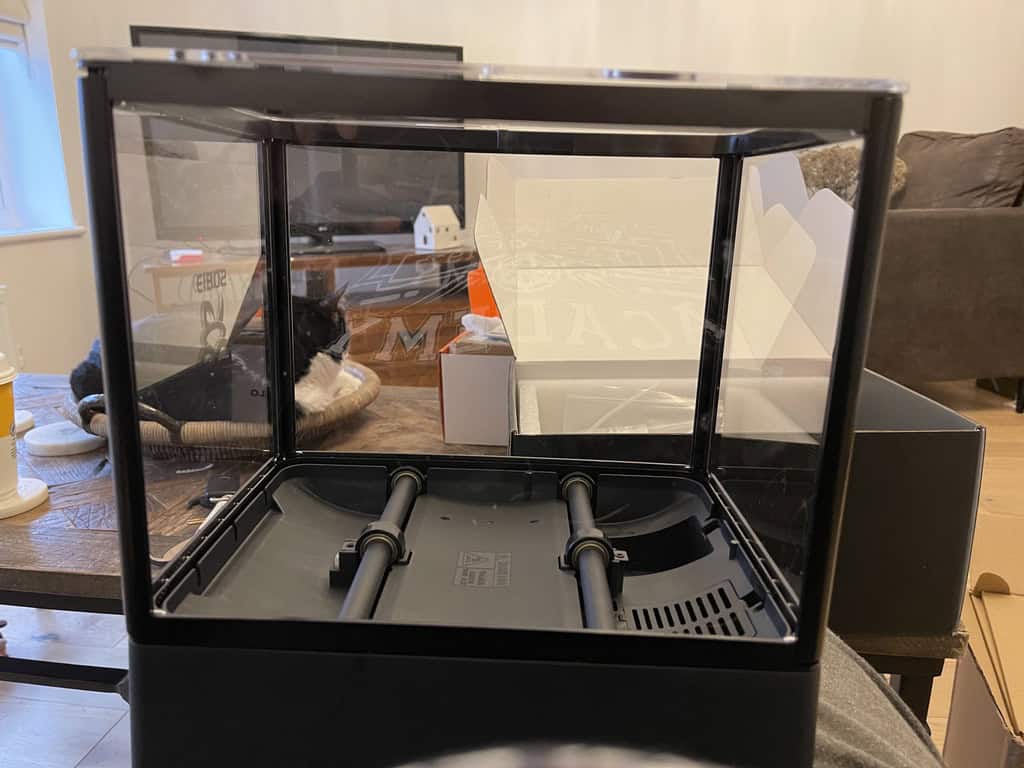
Yes, I got the panel with the logo on back to front, but it doesn’t impact its operation and my excuse is I was hopped up on medication when I put it together!
There are also compartments for desiccant packets to aid in moisture control without requiring being powered constantly. That is a nice touch.
Polyphemus Performance
The Polyphemus was effective at drying, as you would expect, with no signs of filament overheating or inconsistent heating.
A spare roller motor is included, providing reassurance for long-term use, but everything seems robust.
For those frequently working with expensive humidity-sensitive filaments, the Polyphemus offers a unique combination of features. It might be pricey to have multiple of these for full-time storage, but for drying before use I think it makes a great purchase.
Get the full details
Get all the detailed specifications and current up to date pricing at the official EIBOS site

 Elecrow CrowPanel 5.79″ E-Paper ESP32 Display Review